
Ryme Completes Successful Glacier Field Trials at Zugspitze
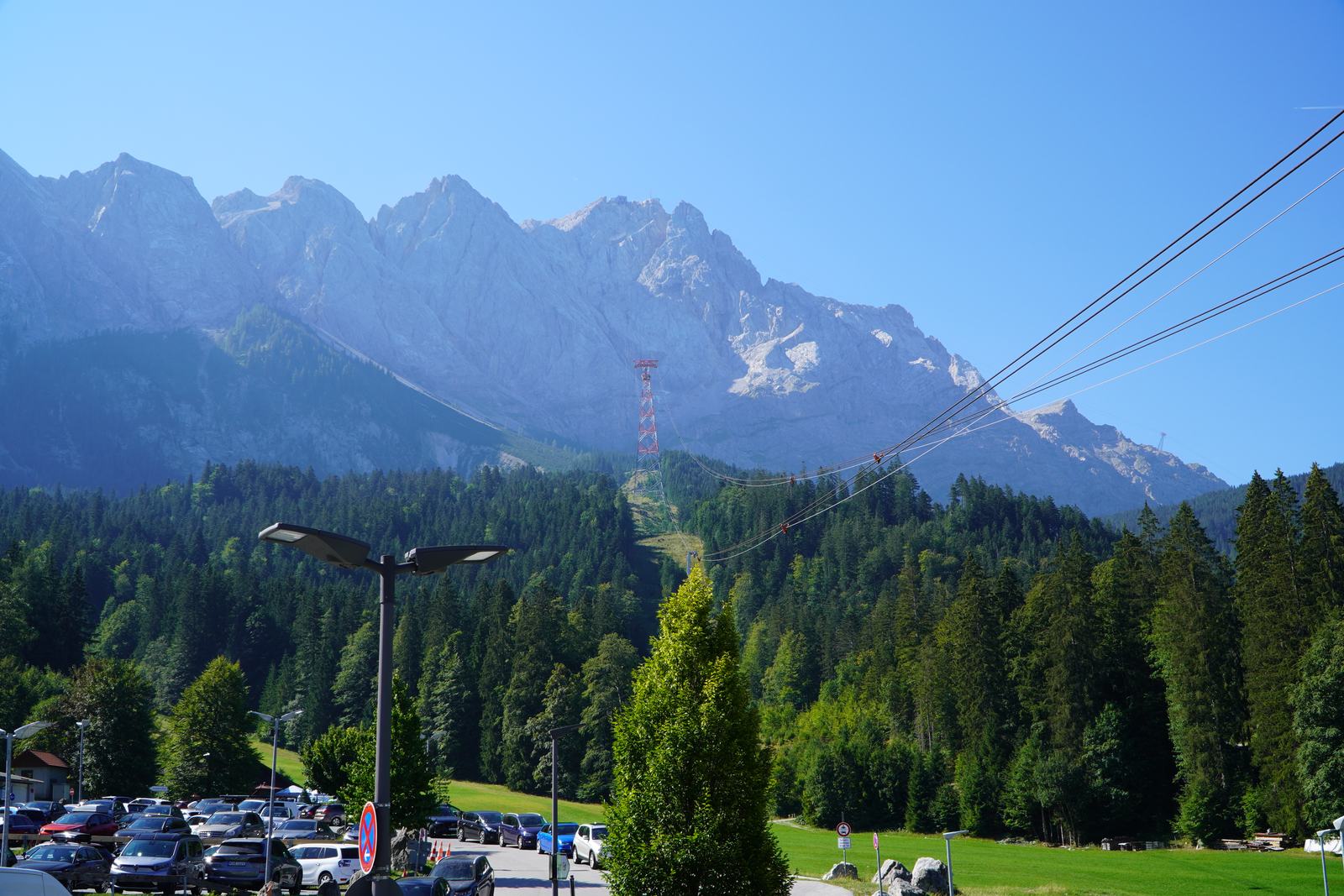
Ryme has completed a successful field campaign at Zugspitze, Germany's highest mountain, testing key sensing and communications technologies for our autonomous glacier monitoring platform. The deployment provided an opportunity to move beyond controlled testing and operate our systems directly on a glacier, helping us understand how the hardware and software perform in a challenging real-world environment.
A major focus of the campaign was validating our radar system for measuring ice depth. We collected radar measurements across the glacier and successfully detected the glacier bed, providing encouraging agreement with existing estimates of ice thickness. The results demonstrate the potential of the system for repeatable, autonomous measurements of glacier change, with a scientific publication based on the radar work now in preparation.
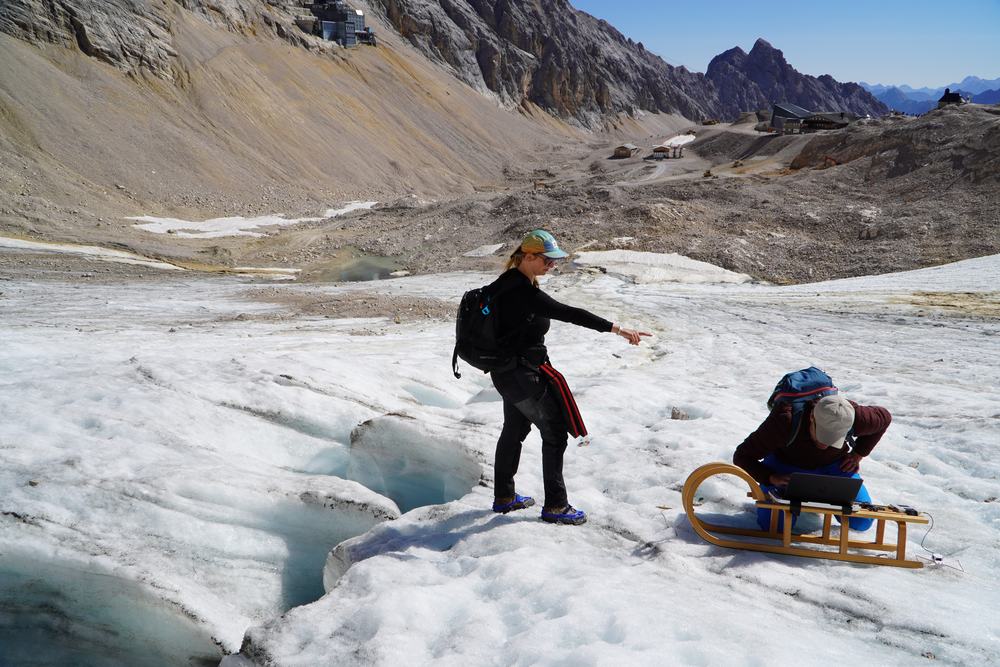
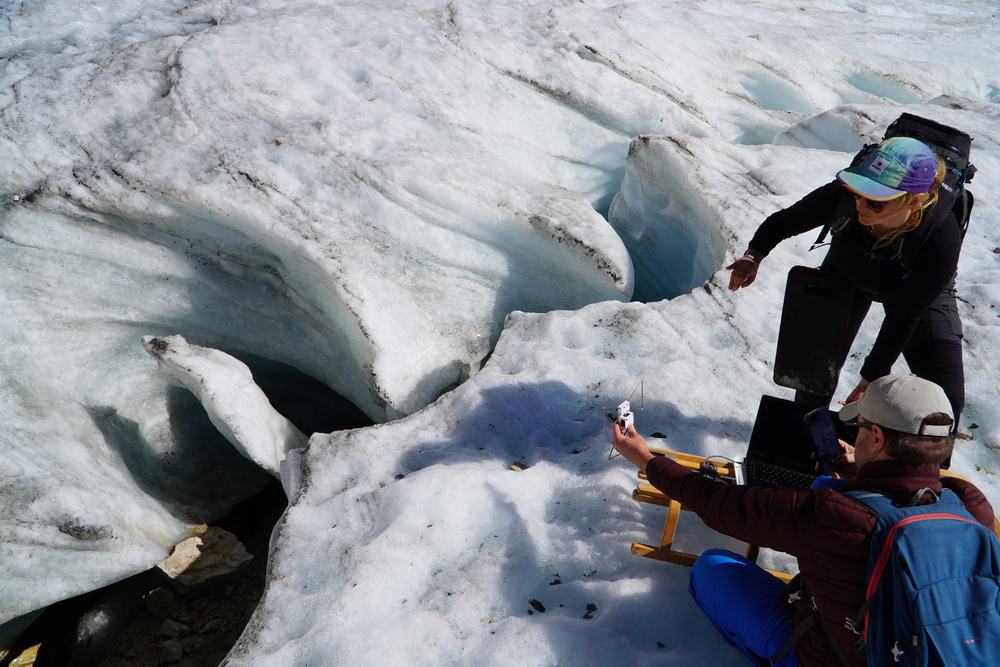
Alongside the radar measurements, we tested a sonar system designed to provide complementary measurements that can ultimately be combined with radar through sensor fusion. Testing the two approaches together will allow future Ryme stations to build a more complete picture of their surroundings and improve the robustness of measurements collected autonomously in complex glacier environments.
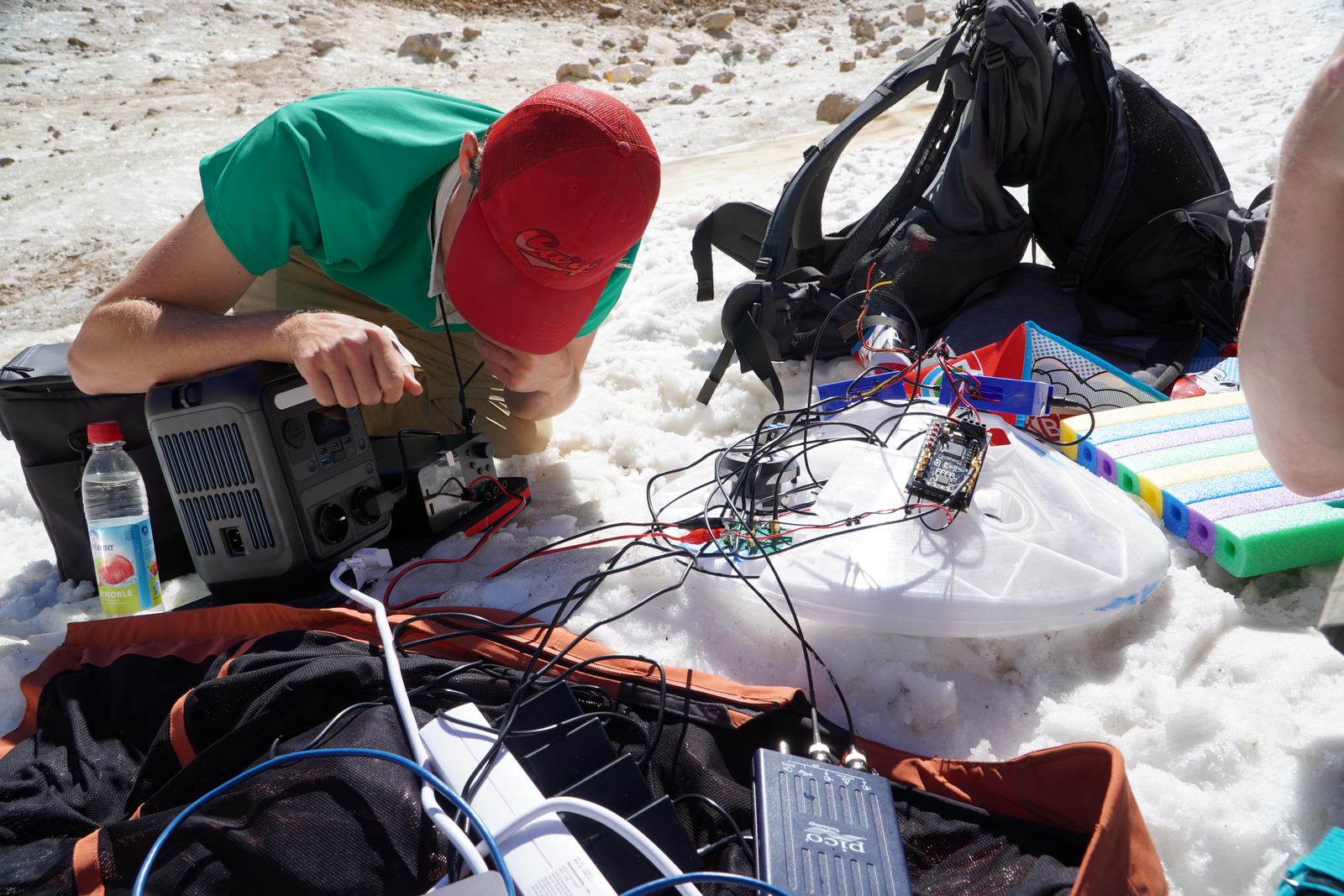
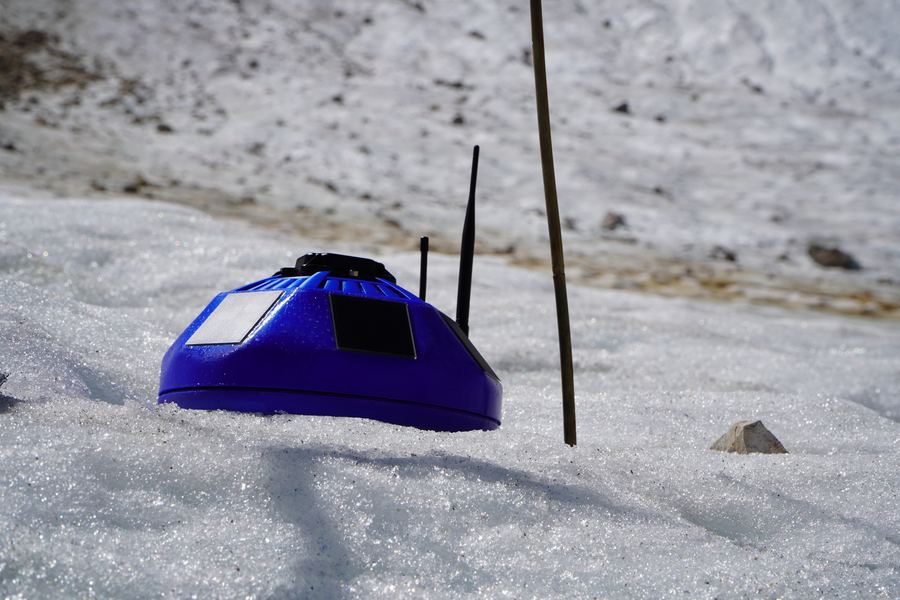
We also deployed a complete Ryme Basestation on the glacier, allowing us to test the full system rather than individual sensors in isolation. The campaign helped us identify and resolve several practical hardware and software issues that only become apparent during field deployment, while successfully demonstrating remote communications between the station in the Alps and our team in the UK.
The results from Zugspitze give us much greater confidence in the next stage of the technology: deploying large networks of autonomous Basestations across Greenland. Operating a distributed grid in such a remote environment requires the stations to measure, communicate and operate with minimal human intervention. Zugspitze provided an important opportunity to test these capabilities, understand where improvements are still needed, and take those lessons forward into the design of our future Greenland deployments.